
Drywood & subterranean treatment — local, fumigation, and bait
Termite Control & Treatment in Orange County
Coastal Orange County is heavy drywood-termite country. We treat with the right method for the situation — localized treatment, full fumigation, or subterranean bait and barrier work.
Termite control from Trident Pest Control treats active drywood and subterranean termite infestations using the method that fits the situation — localized treatment, full-structure fumigation, or subterranean bait stations and soil treatment. Work is performed under California Structural Pest Control Board License #PR8662, and we can coordinate Section 1 clearance documentation for escrow when treatment we perform clears the original findings. Termite inspections and reports are issued under Trident Pest Control, California SPCB License PR8662, Branch 3.
Service Area
Routed to a focused nine-city Orange County area
Trident Pest Control currently serves Orange, Orange Park Acres, Villa Park, Anaheim Hills, Yorba Linda, Brea, Placentia, Fullerton, and Irvine. Routes are density-limited and kept tight on purpose — it's how we keep response times short. Just outside the list? Contact us; we can sometimes accommodate based on scheduling.
Looking for termite control in a specific city? See our pages for termite control in Irvine, termite control in Orange, and termite control in Fullerton.
Every termite control service from Trident covers:
- Inspection and identification of drywood vs. subterranean activity
- Localized / spot treatment for accessible, contained drywood infestations
- Full-structure fumigation when activity is widespread
- Subterranean bait stations and soil barrier treatment
- Conducive-condition findings (moisture, earth-to-wood contact)
- Coordination of fumigation prep, plant protection, and re-entry per regulation
- Section 1 clearance documentation for escrow when applicable
- Recommendations to reduce future risk
Common pests we treat
Identification, signs of infestation, and what makes each one worth professional treatment.
Subterranean Termites
Reticulitermes hesperus
Soil-dwelling termites that build mud tubes from the ground into wood — driven by foundation moisture in OC.
Drywood Termites
Incisitermes minor
Wood-dwelling termites that don't need soil — endemic to coastal OC framing, with fall swarms.
Why termite control matters in Orange County
Within roughly ten miles of the coast, Orange County drywood termites are not a question of if but how much — they swarm September through November and colonize attic framing, eaves, and window and door frames. Subterranean termites add ground-up pressure, especially where there's moisture or earth-to-wood contact.
There's no single right termite treatment. A small, accessible drywood pocket can be handled with localized treatment; widespread drywood activity calls for full fumigation; subterranean infestations need bait and soil work. Matching method to situation is what separates a real fix from a temporary one.
For real estate transactions, most California lenders require a Section 1-clear report before funding. When we perform the treatment that clears those findings, we can issue clearance documentation directly to your escrow officer.
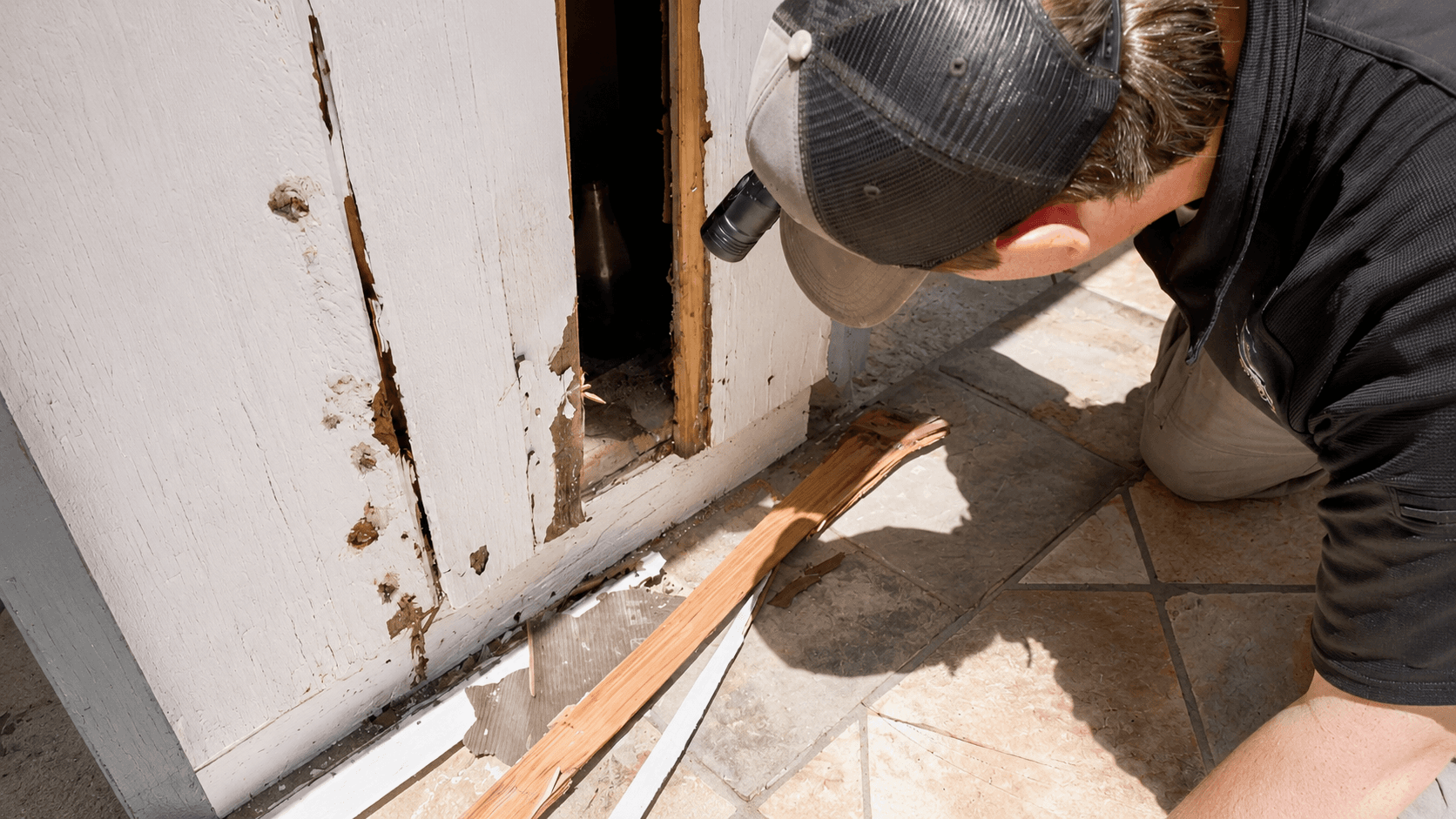
How a Trident treatment works
- Step 01
Inspect
We confirm the species, extent, and access — drywood, subterranean, or both — and conducive conditions.
- Step 02
Recommend
We match the method to the situation: localized treatment, fumigation, or subterranean bait/barrier.
- Step 03
Treat
We perform the treatment under SPCB License #PR8662, coordinating prep and re-entry per California regulation.
- Step 04
Document
We provide treatment documentation and, when applicable, Section 1 clearance for escrow.
Termite treatment is quoted per property after inspection — method (localized, fumigation, or subterranean), structure size, and access drive pricing. Escrow clearance coordination available when applicable. See full pricing →
Common questions
You might also need
Ready to handle your termite control?
Licensed technicians, IPM-first, no contracts. Serving nine Orange County cities under CA SPCB License #PR8662.