
Escrow Termite Reports in Orange County
WDO reports for agents, escrow officers, buyers, and sellers — inspected in-house by Trident's own Branch 3 licensed staff and written in the Section 1 / Section 2 format escrow expects.
An escrow termite report is a wood-destroying organism (WDO) inspection report prepared for a real estate sale. Trident Pest Control performs these inspections in-house — never sub-contracted — under California Structural Pest Control Board License #PR8662 (Branch 2 & 3), using the Section 1 / Section 2 format that agents, escrow officers, and lenders read, with same-week turnaround for most properties.
What a WDO report is
A wood-destroying organism (WDO) report — usually just called the termite report — documents the condition of a structure's wood at the time of inspection. The inspector looks for drywood and subterranean termites, wood-boring beetles, fungus or dry rot, and the moisture and earth-to-wood conditions that lead to them, across the accessible areas of the property.
Each finding is listed with where it is, what it is, and what is recommended. Areas that could not be inspected are recorded as well, so everyone reading the report knows what was and was not seen.
A home inspection and a termite report are two different documents under two different sets of rules. A home inspector can note visible damage, but a California termite report has to come from a company registered with the Structural Pest Control Board for Branch 3.
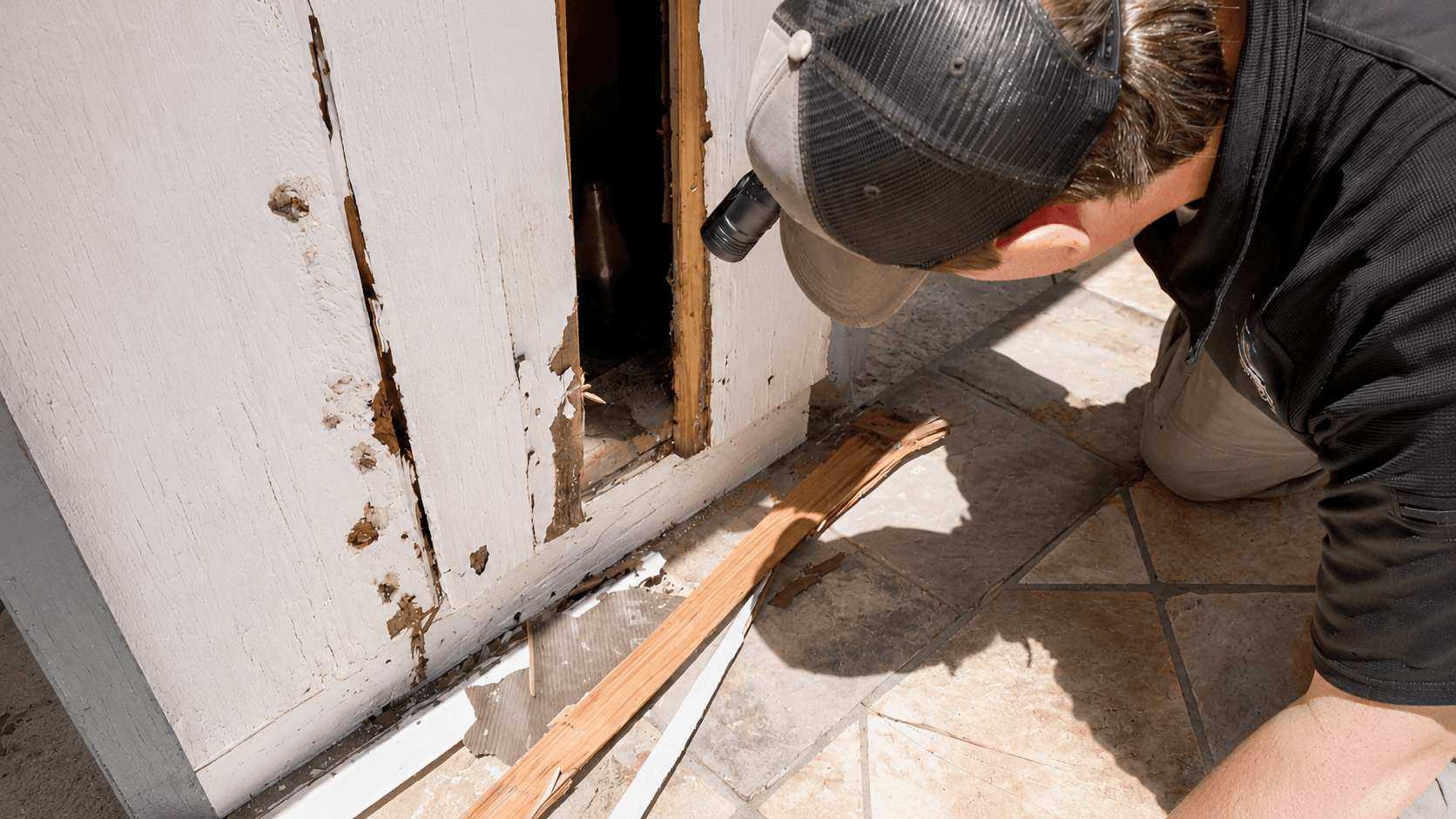
Branch 3, done by Trident's own licensed staff
Trident Pest Control holds California Structural Pest Control Board Company Registration #PR8662 (Branch 2 & 3). Branch 3 is the class that covers termites and other wood-destroying organisms; Branch 2 covers general pests.
The inspection is performed in-house and never sub-contracted. Founder Jeff Clark is a Field Representative licensed for Branch 2 and Branch 3 (FR65979), and General Manager Sean Culpepper is a Branch 3 Field Representative (FR68536). The company that inspects the property is the company that stands behind the report.
Section 1 vs. Section 2, in plain terms
California termite reports sort every finding into one of two sections, using the Structural Pest Control Board's standard definitions. Which section an item lands in usually decides who deals with it and when.
Section 1
Active infestation, infection, or damage
Items with visible evidence of an active infestation or infection, or damage that resulted from one — live drywood termites, active subterranean mud tubes, fungus (dry rot) damage. These are the items lenders and escrow focus on, and they are commonly required to be corrected before close.
Section 2
Conditions likely to lead to a problem
Conditions deemed likely to lead to infestation or infection where no active infestation was found — earth-to-wood contact, excessive moisture, a slow plumbing leak, poor ventilation. Correcting them is often treated as optional in a sale, but they are where tomorrow's Section 1 items come from.
Areas that could not be inspected are listed separately, often with a recommendation for further inspection once they are made accessible.
Built for everyone on the transaction
Sellers
A report ordered before listing tells you what a buyer's inspector is likely to find, so Section 1 items can be scoped and priced before they become a negotiation.
Buyers
A report inside your contingency period shows active termite activity, dry rot, and damage in writing — the information you need before you remove contingencies.
Real estate agents
One licensed company to schedule, a report in the format your clients' lenders expect, and same-week turnaround for most properties to keep the timeline intact.
Escrow officers
A report that separates Section 1 from Section 2 findings, and, when Trident's own treatment clears the Section 1 items, clearance documentation sent to you directly.
The report lenders and escrow read
Trident's termite reports follow the Structural Pest Control Board's Section 1 / Section 2 format — the layout agents, escrow officers, and lenders already know how to read. Findings are located, described, and paired with a recommendation, so the report can go straight into the repair and credit conversation.
Turnaround is same-week for most properties. Give us your contingency or close-of-escrow date when you book and we will confirm timing for your address up front.
Book it with your home inspection
Trident Pest Control is the pest division of Trident Inspection Group. When you book a Trident home inspection, the termite inspection can be added and done on the same visit — no second company to schedule, and one company answering for both reports while your contingency clock runs.
See how in-house termite inspection works at Trident Inspection Group →
Clearance after Trident treatment
When the report shows Section 1 findings and Trident Pest Control performs the treatment that clears them, we can coordinate Section 1 clearance documentation and send it directly to your escrow officer.
Treatment is matched to what the inspection found and quoted per property, and the clearance documentation goes to escrow so the file can move toward close.
Added to a Trident Inspection Group home inspection, the WDO / termite inspection is listed at $135. Standalone escrow reports are quoted per property — request a quote → Treatment to clear Section 1 findings is covered on our termite control page.
Escrow termite report questions
Need a termite report for escrow?
Tell us the address and your contingency date. Same-week turnaround for most properties, under CA SPCB #PR8662 (Branch 2 & 3).